
Top 10 marketing systems small teams should build first
A practical top-10 list of high-impact systems that help small teams execute consistently, improve lead quality, and scale without chaos.
Why systems beat random tactics
Small teams do not need more hacks. They need repeatable systems that survive busy weeks.
Most teams are not blocked by lack of ideas. They are blocked by execution inconsistency. One week is high output, the next week nothing ships.
The fix is to build systems that make good decisions easier and repetitive work faster. Systems reduce chaos, protect momentum, and improve quality over time.
The list below focuses on practical systems you can run with a lean team and limited bandwidth.
Top 10 systems that create compounding growth
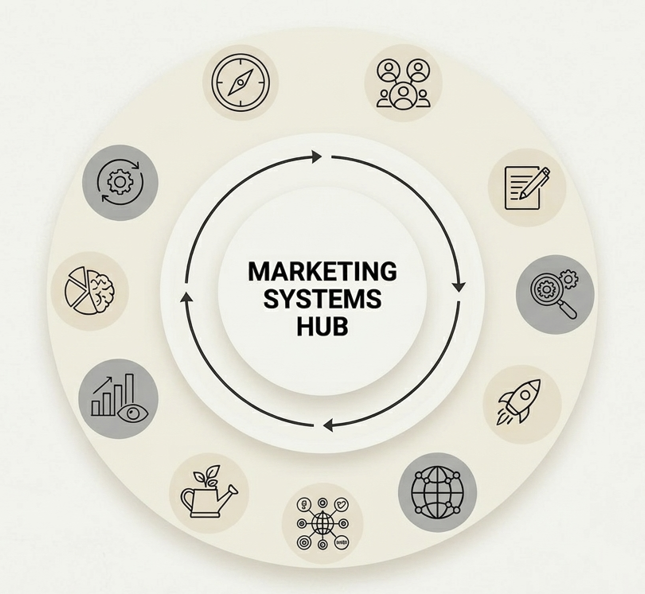
These ten systems work together. If one is missing, performance becomes unstable. If all ten run consistently, small teams can produce enterprise-level execution discipline.
- 1) Weekly audience-priority system: choose one segment and one painful problem to focus on each week
- 2) Message architecture system: define one core promise and reuse it across content, ads, and landing pages
- 3) Content production system: turn one core idea into multiple channel-ready assets without rewriting from zero
- 4) Landing page system: keep one conversion structure and adapt copy/proof by campaign intent
- 5) CTA and offer system: map CTA type to intent stage (cold, warm, high intent)
- 6) Publish cadence system: lock realistic schedule and protect shipping deadlines
- 7) Tracking system: standardize
page_view,cta_click,form_submit, andqualified_lead - 8) Review system: run weekly 30-minute decision review with clear keep/change actions
- 9) Experiment system: run one variable test at a time with a defined success threshold
- 10) Learning library system: document wins, losses, and reusable playbooks by campaign type
How to prioritize the top 10 in the real world
Do not implement all ten at once. Start with the systems that remove your current bottleneck, then layer additional systems over 4-8 weeks.
- If output is inconsistent: start with publish cadence + content production
- If traffic is fine but leads are weak: start with landing page + CTA/offer system
- If activity is high but decisions are weak: start with tracking + weekly review
- If progress repeats the same mistakes: start with experiment + learning library
What this looks like after 30 days
Within a month, most teams see cleaner priorities, faster execution, and better campaign continuity. You get fewer random tasks and more measurable progress.
The biggest win is confidence: the team stops debating basics every week and starts improving a shared operating model.
How Bizabee supports this top-10 framework
Bizabee helps small teams operationalize these systems by connecting content workflow, landing page execution, and tracking in one practical environment.
You can move from strategy to shipped assets faster, keep message consistency across channels, and review performance with clearer signal quality.
That means less tool-switching overhead, fewer handoff errors, and a stronger weekly execution rhythm.
About the author
Yarden Gabay is the founder of Bizabee, an AI marketing platform for small teams. He writes about lead generation, landing pages, and the marketing systems that help small businesses grow without big budgets.